The goal of the automatic re-configuration tool is to adaptively plan the trajectory of the robot based on the process model, the part geometry and the input parameters from the process before. Within the evolution of the re-configuration tool and its purpose of a generic approach the following categorisation of the single processes was developed: • Abrasive Processes (Gouging/Grinding/Polishing) • Deposition Processes (Welding) • Inspection Processes (US Inspection/MPI)
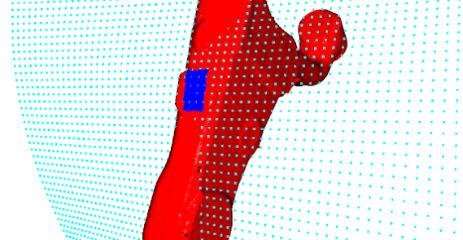
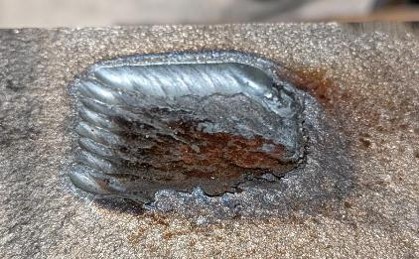
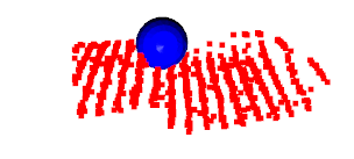
Abrasive processes include the gouging, grinding and polishing process. Although the amount of material to be removed is different for every process, the planning of the path for the robot remains the same. Deposition processes include all processes where material is brought onto the part. The path planning for the welding process is very similar to the 3D printing process. For the development of the reconfiguration tool, it can be described as the same methodology for the abrasive process but applied in inverse manner. These processes do not interfere or change the shape of the part; the process models of these processes are defined by a specific area/volume which can be inspected at a given position of the robot. As example for the reconfiguration tool, the gouging process is shown in the images below.
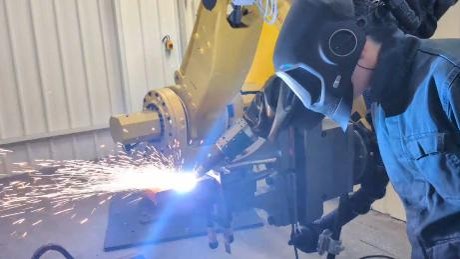
The left coloumn shows the simulation of the gouging process with gouging tool represented by a blue ball. Every point which is touched by the meander shaped moving ball drifts downward. The right column shows the execution of the calculated path and the result of it.